JDOT #10: GLM-5, AIMAC, and the AI Acceleration

February 12, 2026
Tags:
GLM-5's AIMAC results, viral essays about AI, OpenClaw, video generation, and recent interviews.
Shocking new AIMAC Benchmark results!
Since JDOT #9, several new AI models came out, and we have run them against AIMAC, our accessibility benchmark for AI. I still can't believe the results. But I will leave that to the end of the newsletter, because it's somewhat technical and I don't want to lose the general audience until the end.
In fact, from now on, I'll order this newsletter from less technical to more technical topics to make readers' lives easier.
Something Big is Happening
Matt Shumer wrote a now viral article about what's going on in AI and it's scaring everyone. Here's how it starts:
"If you were paying close attention, you might have noticed a few people talking about a virus spreading overseas. But most of us weren't paying close attention...SNIP...Then, over the course of about three weeks, the entire world changed. Your office closed, your kids came home, and life rearranged itself into something you wouldn't have believed if you'd described it to yourself a month earlier."
He's absolutely right. We've reached the crazy phase of exponentials and no one can keep up anymore.
Anthropic CEO Dario Amodei Scares Everyone. Again.
In a similar vein, Dario Amodei wrote a wall of text called The Adolescence of Technology. It's so long that I'm not done with it yet, but the part I did read is pretty scary and true. It prompted George Hotz to write another blog post called The Importance of Diversity which you should read too.
Predicting the future of tech is an exercise in showing how foolish you are unless your name is Ray Kurzweil who literally has a crystal ball or something.
However one bet that's safe to take is that as technology gets better, it gets easier to create weapons that can kill or hurt a lot of people at once. Being the child of Holocaust survivors gives you a different lens on world events. You want to be prepared.
Drones and Robots
The world has an army of drones killing people already. I'll link to a video of soldiers being killed in this horrific way. As a commenter said, humans getting killed over a line in a map. It's tragic. Today it's your enemy, tomorrow it's your side.
AI Robots will be here soon. The more these are centrally controlled, the more likely that the powers in charge will be able to, and yes will, actually cause a lot of harm to innocent people. We are not implementing these technologies wisely.
Ring Super Bowl Ad Backfires
For example, there was a Super Bowl ad for Ring that backfired. We have cameras in our homes that film visitors and intruders. But by centralizing this technology, we have to pay monthly for the AI image recognition, and third parties control our privacy. Both the AI and the video should be controlled by us alone at home, with perhaps a feature to encrypt and stream the video one-way to the cloud in case intruders erase the local video.
I too am worried about the uncertainty, but try not to be a "doomer". I believe (hope) that Open Source AI will help ensure that AI is not centralized, and that's why I'm excited for the amazing results that Open Source models have returned in the latest AIMAC benchmark.
Clawdbot (OpenClaw) Goes Viral!
At the beginning of the year, in JDOT #8, I mentioned the amazing work of 🦄 Peter Steinberger. Since that time, Clawdbot (now OpenClaw) has gone completely viral. So many users bought Mac Minis to run OpenClaw that it even impacted Apple's supply chain!
He's a great guy, offering up this gift to the world for free. He has done the podcast circuit, and last night Lex Fridman posted a 3 hour interview on his pod. I'm listening to it as I type. It sounds like OpenAI and Meta are interested in buying OpenClaw. And like the generous soul he is, Peter will only do it if the project stays free and open source. Kudos to his integrity.
I haven't had enough time to lock it down properly and really put OpenClaw through its paces, but as soon as that's done, I've got several blind friends who are technical and want to code with it, including with the Meta Ray Bans. If you've tried it, especially with assistive technology, please share your experience in the comments.
AI Generated Video is getting closer to breaking out
There are already many impressive video models, but in the last few days, people have been trying out ByteDance's Seedance 2.0. The videos are really very good. Hollywood will look very different in a couple of years. There are tradeoffs, as usual. It will open the door for creators to make video that looks like a million bucks. But it will kill jobs like acting and much of the supply chain that feeds a movie set. Then it will create new jobs, perhaps for other people. Watch this space.
Interviews and articles since the last newsletter:
AIMAC has really gotten a lot of media attention. Here are some interviews, podcasts and articles that Eamon McErlean and I have participated in since JDOT #9.
- Thanks to Steven Aquino for covering AIMAC's latest results on his new Curb Cuts newsletter.
- I was interviewed for the AI: Voice or Victim podcast, which should come out shortly.
- Chris Maher and Kelvin Crosby interviewed me at Investing in Accessibility during CES.
- Tobias Macey interviewed me for the AI Engineering Podcast
- Shannon Kempe interviewed me for DATAVERSITY's My Career in Data podcast. (Shannon, when I mentioned hockey, I forgot to ask you if you're related to La Kings player Adrian Kempe?)
- Steven Scott and Shaun Preece interviewed Eamon and me for Double Tap TV.
Upcoming podcasts and media:
There are 4-5 AIMAC-related interviews scheduled in the next few weeks. Two of the outlets have very large audiences, which is good for spreading awareness of Accessibility in AI models. Here are a couple of the upcoming podcast episodes of Accessibility and Gen AI Podcast being edited right now:
- Our next episode will feature a demo of AIMAC and a special guest by the name of Jennison Asuncion
- The episode after that will feature my friend Denny Vrandečić, the brains behind Wikidata and an ambitious project called Wikifunctions. The general idea is that you upload facts onto Wikipedia in any language, and WikiFunctions converts it to any language automatically.
RLMs (Recursive Language Models) are coming
I must have spoken about DSPy in these pages before. Well Omar Khattab of ColBERT and DSPy fame has done it again. He wrote a new paper called Recursive Language Models, and like DSPy, it takes an innovative and useful new approach to context management.
As a reminder, the idea behind DSPy is to stop building systems by using brittle prompt templates to prompt Language Models. Prompts aren't robust and need changes with every new model. We should be programming Language Models. DSPy uses various techniques to optimize prompts which change over time along with your system and changes to the underlying models your system uses.
The concept with RLMs are to solve the biggest problem LLMs face, which is context rot and wrangling large volumes of data. He proposes assigning context to variables and recursively using programs to parse all this data, pass it to a variable and eventually bubble up the right amount of context to the parent model.
New AIMAC Results
Here are the new models since our last update:
- Anthropic released Claude Opus 4.6.
- OpenAI released Codex 5.3, however it's not yet available via API so we can't test it yet.
- Kimi (Moonshot AI) came out with Kimi K 2.5.
- Qwen AI came out with Qwen3 Coder Next and Qwen3 Max Thinking.
- Z.ai came out with GLM 5, which was originally a stealth model on OpenRouter called Pony Alpha.
- OpenRouter also has another stealth model we tested called Aurora Alpha.
- MiniMax came out with MiniMax-M2.5 while I was getting ready to hit send on this new edition. It came in 8th place! AIMAC is being updated as we speak.
There are rumours that Google DeepMind's Gemini 3.1 model series are imminent, which is exciting. Hopefully they can escape being dead last in our leaderboard. References to DeepSeek AI's DeepSeek 4.0 have been leaking out so that is apparently imminent as well.
Finally, an exciting development is that Arcee AI, an American company, released Trinity Large Preview, an open source model. Until now, AI at Meta was the only game in town for American Open Source Models. Since Meta's recent releases have been underwhelming, it's welcome to find another lab punching above its weight.
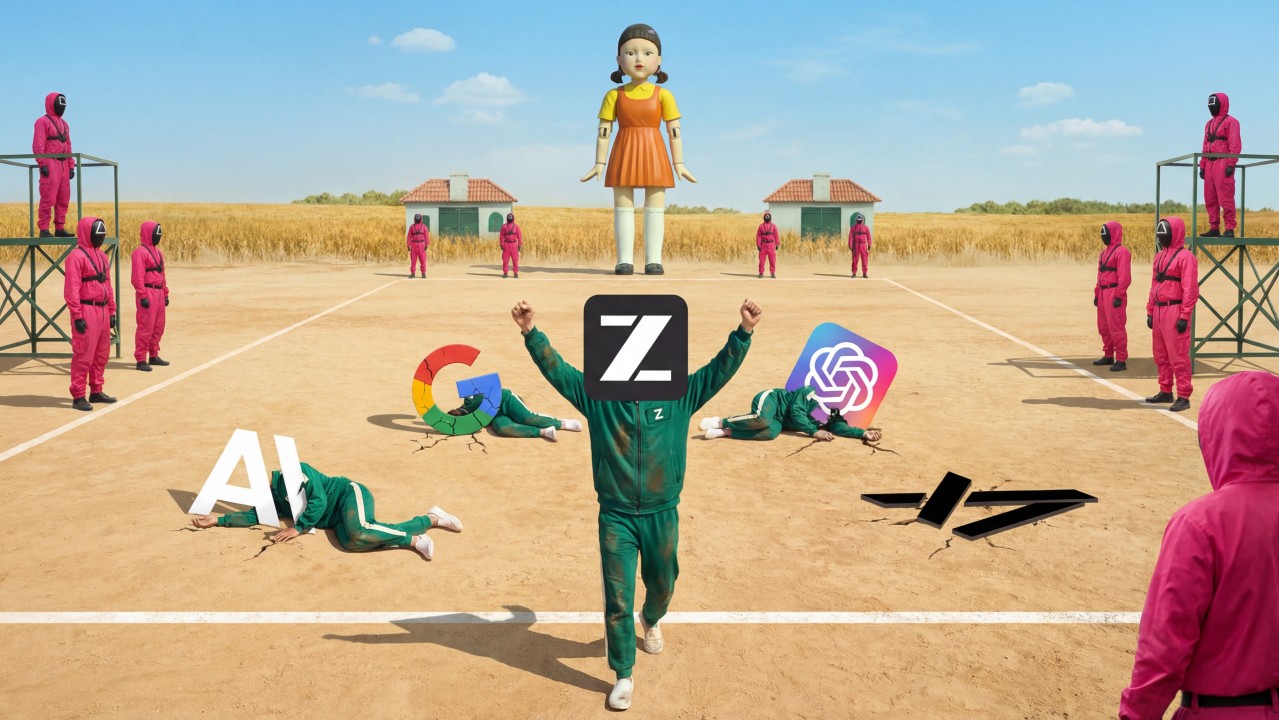
For the first time, an open source model tops the AIMAC Benchmark! GLM 5 scored 10 full points better than GPT 5.2 Pro, the previous winner. More importantly, it only cost ~$2.00 to run the benchmark against GLM 5 vs ~$95 for GPT 5.2 Pro.
Please try out GLM 5 and report back if you're happy with the general model quality as well as how accessible their code is. It has performed really well on many other benchmarks as Theo Browne's YouTube episode goes into. Let's see if the good results hold up in day to day usage.
Head on over to the AIMAC website to see the full results.
Update: A reader DM'ed me, suggesting that I should have pointed out that there were serious security breaches and issues with OpenClaw. This is absolutely true. They have partnered with serious security researchers to make it as secure as possible. However, entrusting an LLM with all your private stuff, while powerful, is a security problem. Caveat Emptor.