JDOT #14: GAAD at Apple Park and Times Square

June 23, 2026
Tags:
Joe Devon remembers his father's role in GAAD, visits Apple Park, recaps the 15th GAAD, and shares AIMAC results and media appearances.
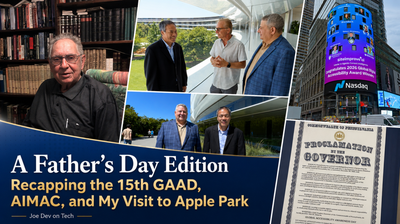
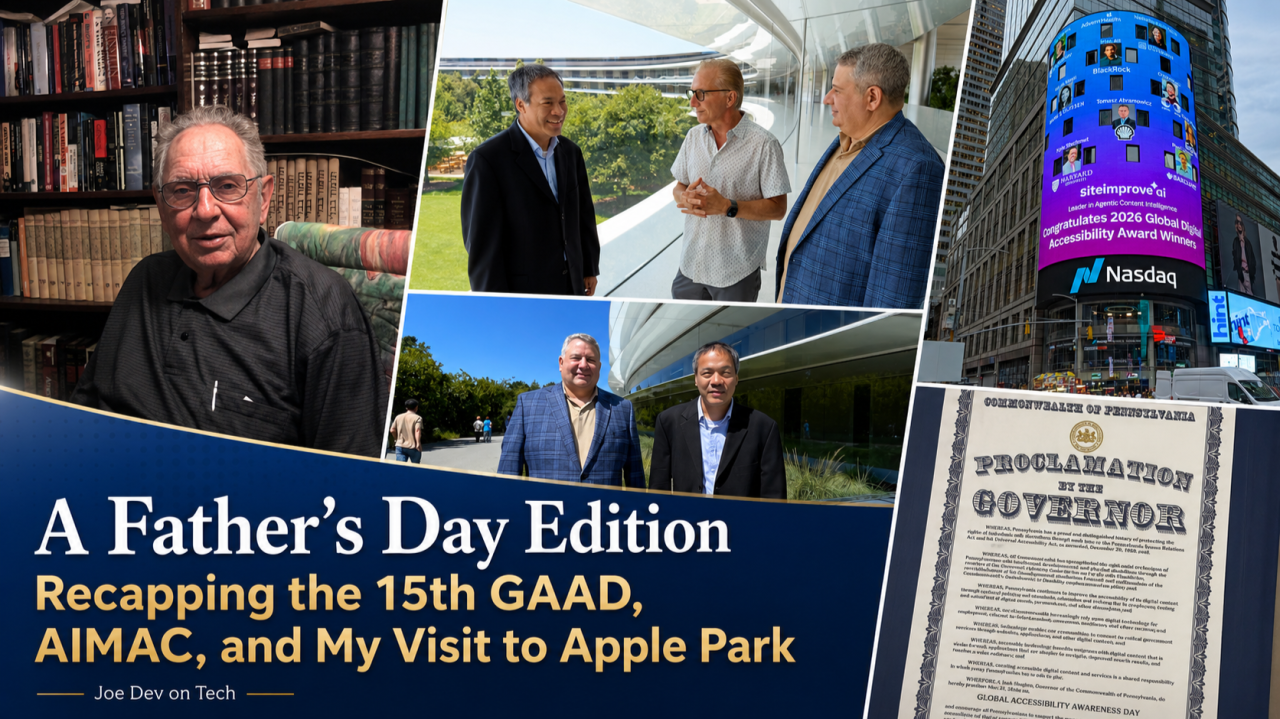
Father's Day
I hope everyone who celebrated had a good Father’s Day this past weekend. If your father is still with you, please cherish these moments. They don't last forever, and you will miss your dad terribly when he's gone. My heart is with those who cannot celebrate, for whatever reason. And my periodic reminder: if you are estranged over reasons that won't matter in the longer run, consider reconciling while you can.
It's been a month since we celebrated the 15th Global Accessibility Awareness Day, and with Father's Day just behind us, I want to share again that my father was central to how #GAAD began.
In a real-life version of the butterfly effect, 15 years ago, my dad's bank decided to update their website without accessibility testing, making it impossible for customers with certain visual impairments, including my dad, to bank online.
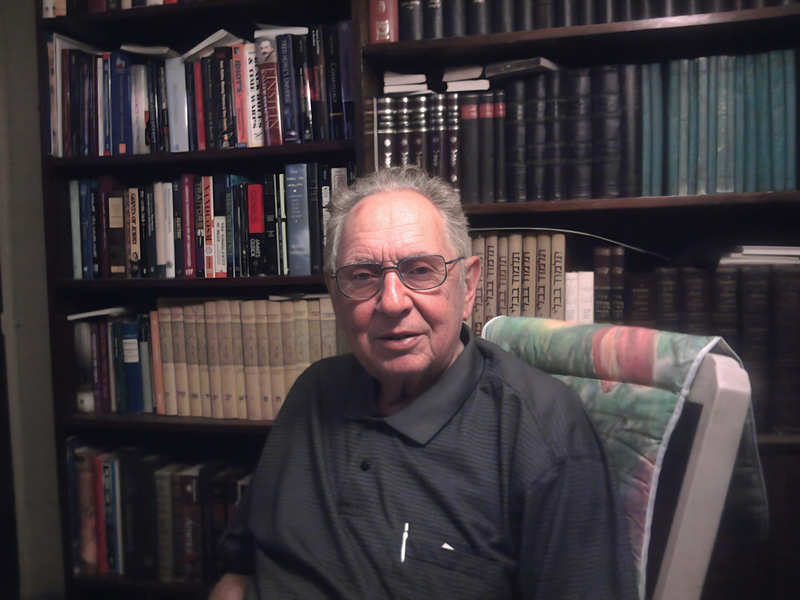 View full-size image: Dad in front of his library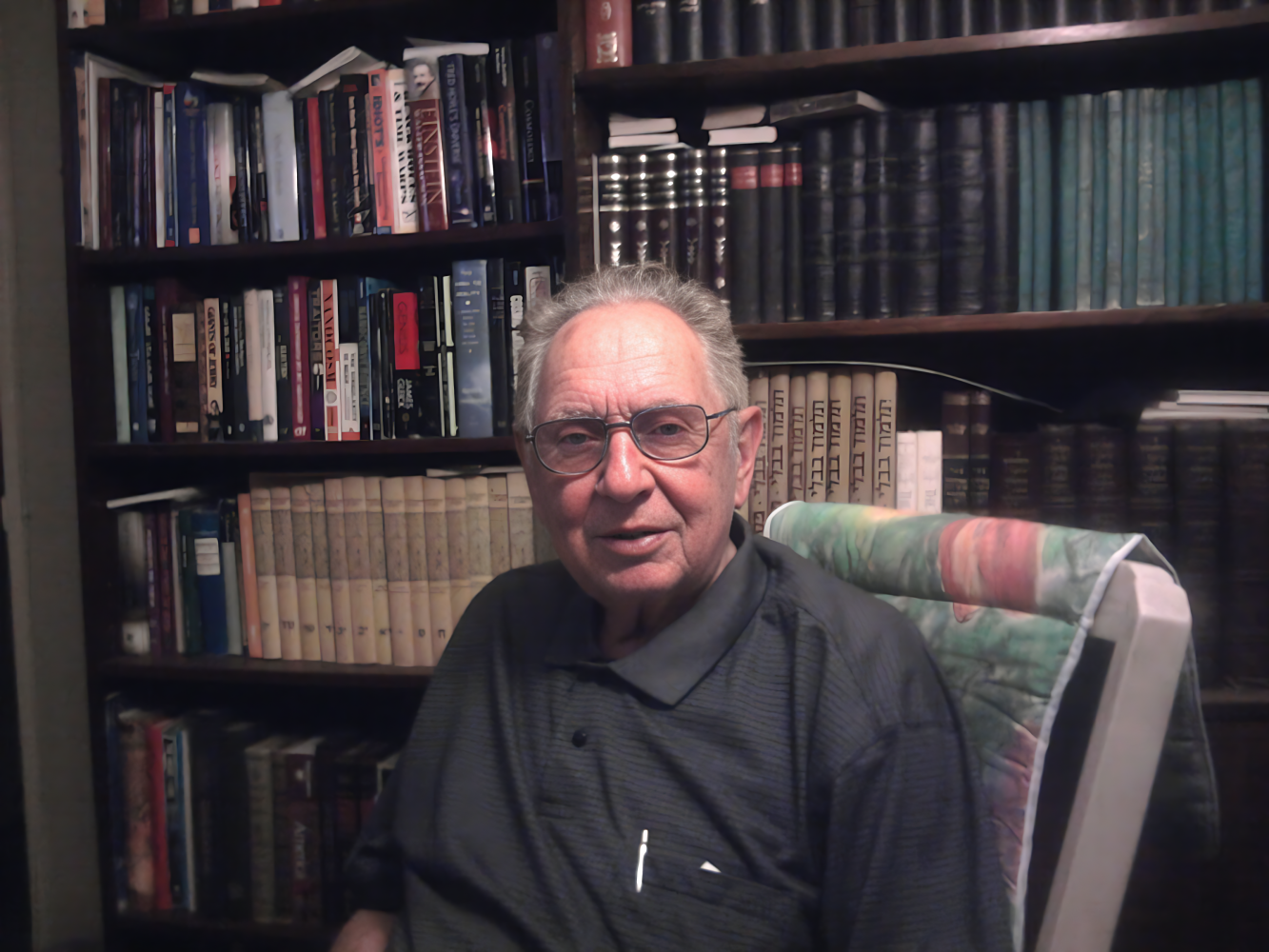
My dad in front of his library
I was so upset that I wrote a blog post titled "CHALLENGE: Accessibility know-how needs to go mainstream with developers. NOW." Jennison Asuncion responded with, "let's make it happen". And here we are, 15 years later, globe-trotting to celebrate the "global" in Global Accessibility Awareness Day.
GAAD Recap
To celebrate 15 years of GAAD, we ran our own official GAAD (Global Accessibility Awareness Day) Foundation events for the first time, on three continents. The events were in London, New York and Bangalore.
Since I've already written about the GAAD Foundation-led events elsewhere, I'll focus here on a few other activities, including the trip Jennison and I took to Apple Park.
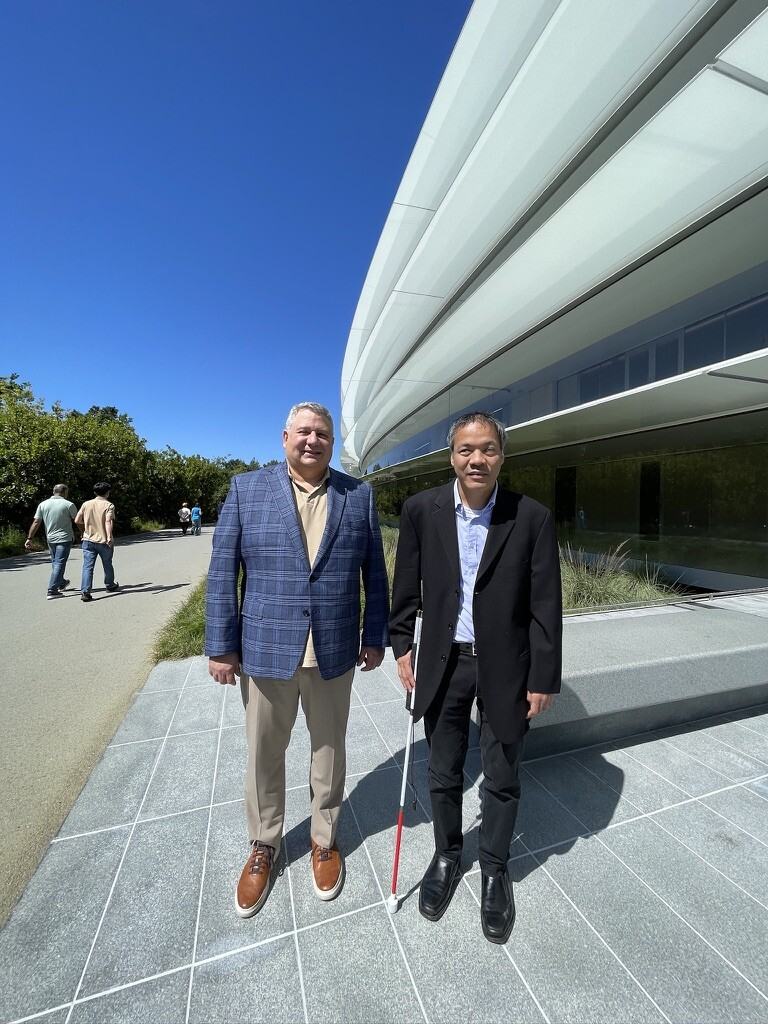 View full-size image: Joe and Jennison standing next to the Apple Loop Building at Apple Park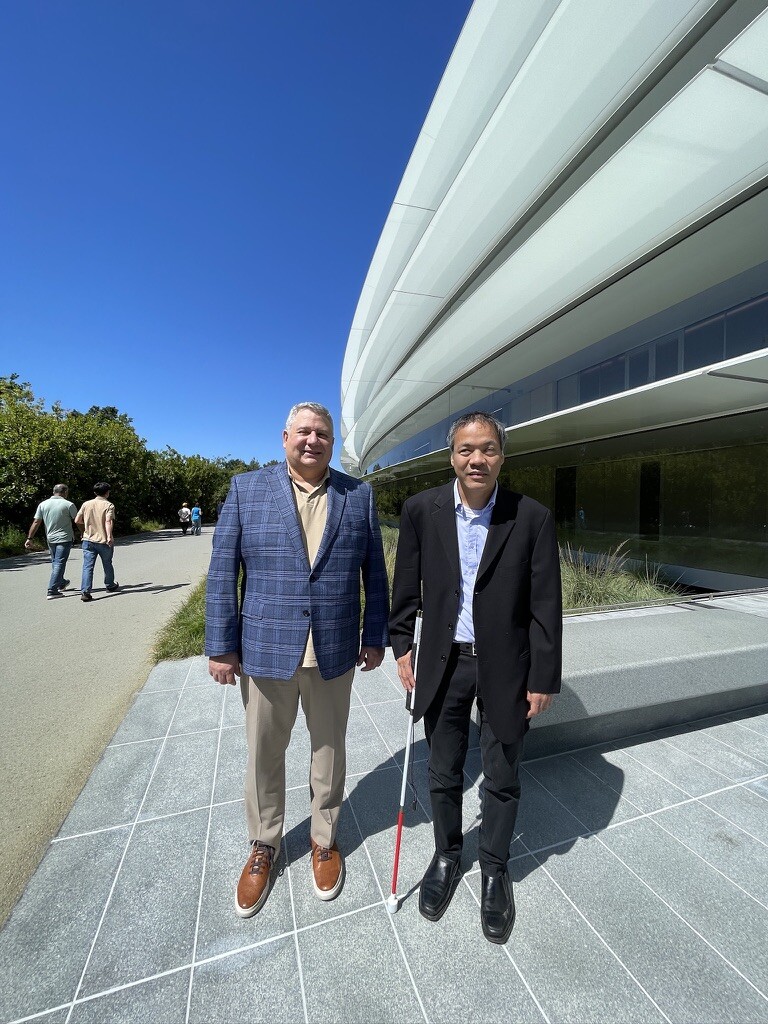
Joe and Jennison at Apple Park
What does not get said enough in GAAD circles is that there are at least as many private events as public ones. Some people get annoyed that there is a marketing component to GAAD where organizations highlight their accessibility work, and in some cases, talk more than do.
But people may miss the perspective that we see all the time. Accessibility departments use GAAD as a tentpole for internal training across their organizations. No marketing involved. We get asked all the time to speak to digital product teams about accessibility. That's where GAAD does some of its most important work.
GAAD at Apple Park
This year, Jennison and I were invited to speak at Apple Park in Cupertino to mark GAAD. We had a lovely fireside conversation with Sarah Herrlinger, Apple's Sr. Director of Global Accessibility Policy, about the origins of GAAD, what it means to Apple, and why AI needs accessibility built into its foundation so people with disabilities are not left behind yet again. I had a wonderful time meeting many empathetic, brilliant folks.
“Joz,” aka Greg Joswiak, SVP of Worldwide Marketing posted this photo from our meeting and wrote:
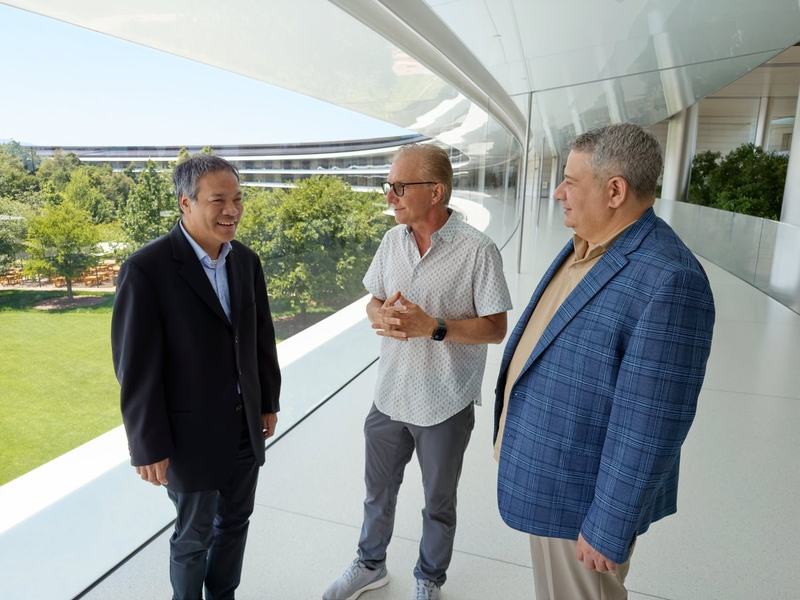 View full-size image: Jennison, Joz and Joe chatting while looking out at the Apple Park garden.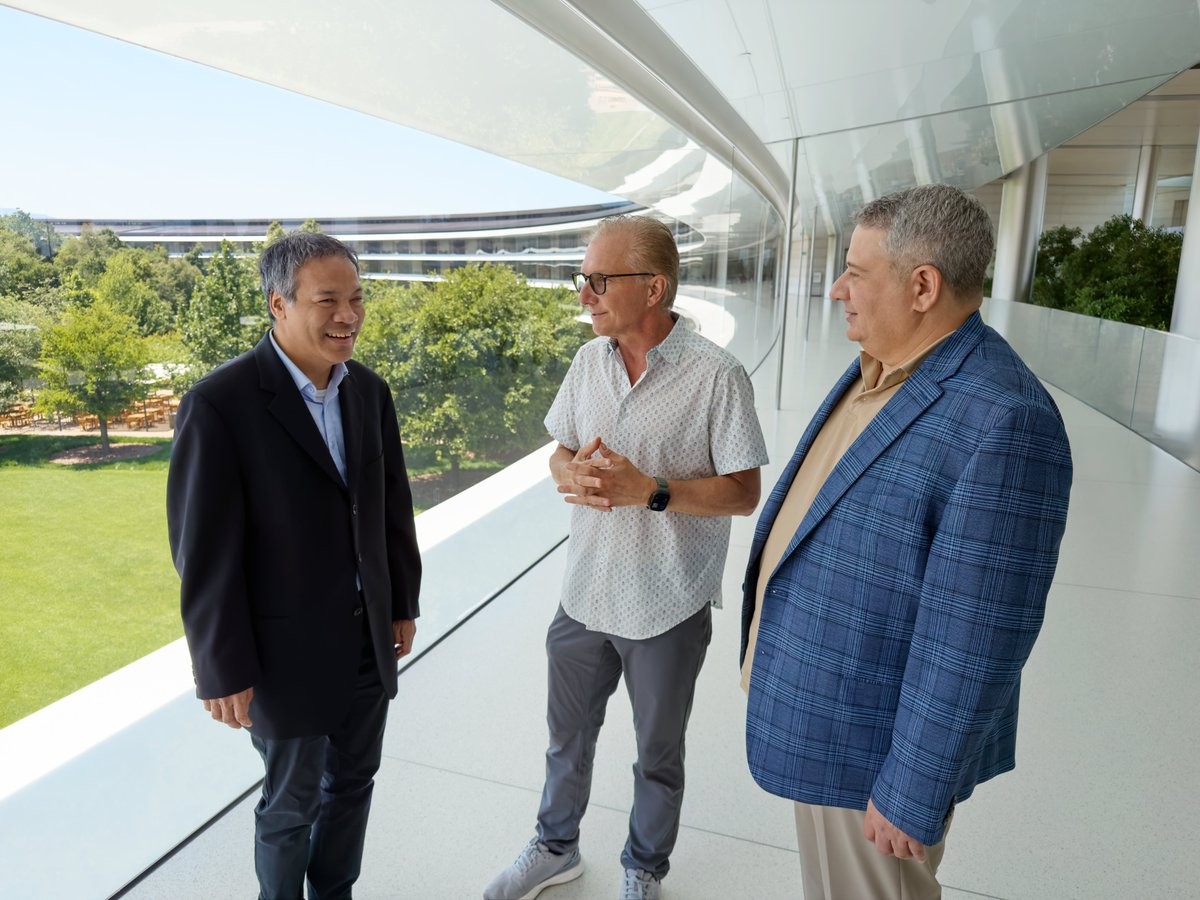
Jennison, Joz and Joe chatting at Apple Park
Great spending time with Global Accessibility Awareness Day co-founders @Jennison and @joedevon at Apple Park, as we celebrate the 15th annual #GAAD. Their work continues to motivate developers and teams at Apple to think deeply about technology, designed with everyone in mind.
Forbes names the GAAD Foundation to the Accessibility 200
The GAAD Foundation is honored to be named to the 2026 Forbes Accessibility 200. Thank you, Forbes!
Honorary Recognition by COGAI
The COGAI® | Cognitive Accessibility Institute® has given me an honorary recognition for making a "meaningful contribution to cognitive accessibility, standards development, human-centred systems, education, or accessible practice". Thank you, COGAI!
GAAD in Lights in Times Square
Siteimprove celebrated GAAD by putting its 2026 Global Digital Accessibility Awards on the big screen in Times Square! I think my dad would have gotten a kick out of that. Thanks, Siteimprove!
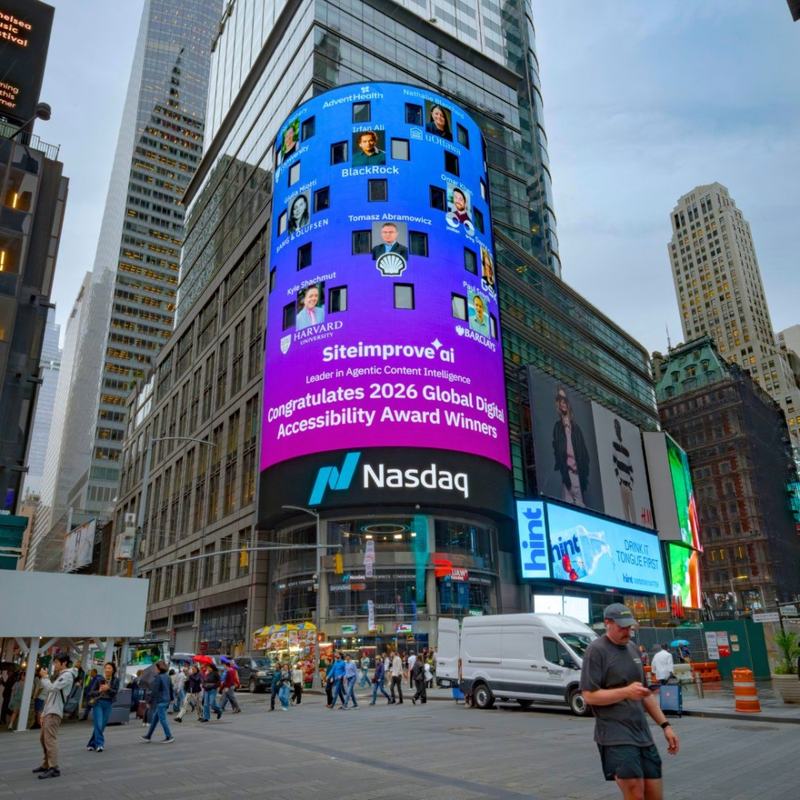 View full-size image: A large digital billboard on the Nasdaq Tower in Times Square, New York, displays the logos of the 2026 Siteimprove Global Digital Accessibility Awards winners against a deep blue background. The Siteimprove.ai logo appears beneath company logos for AdventHealth, Bang & Olufsen, Barclays, BlackRock, CQUniversity Australia, GSK, Harvard University, Posten Bring, Shell, and the University of Ottawa.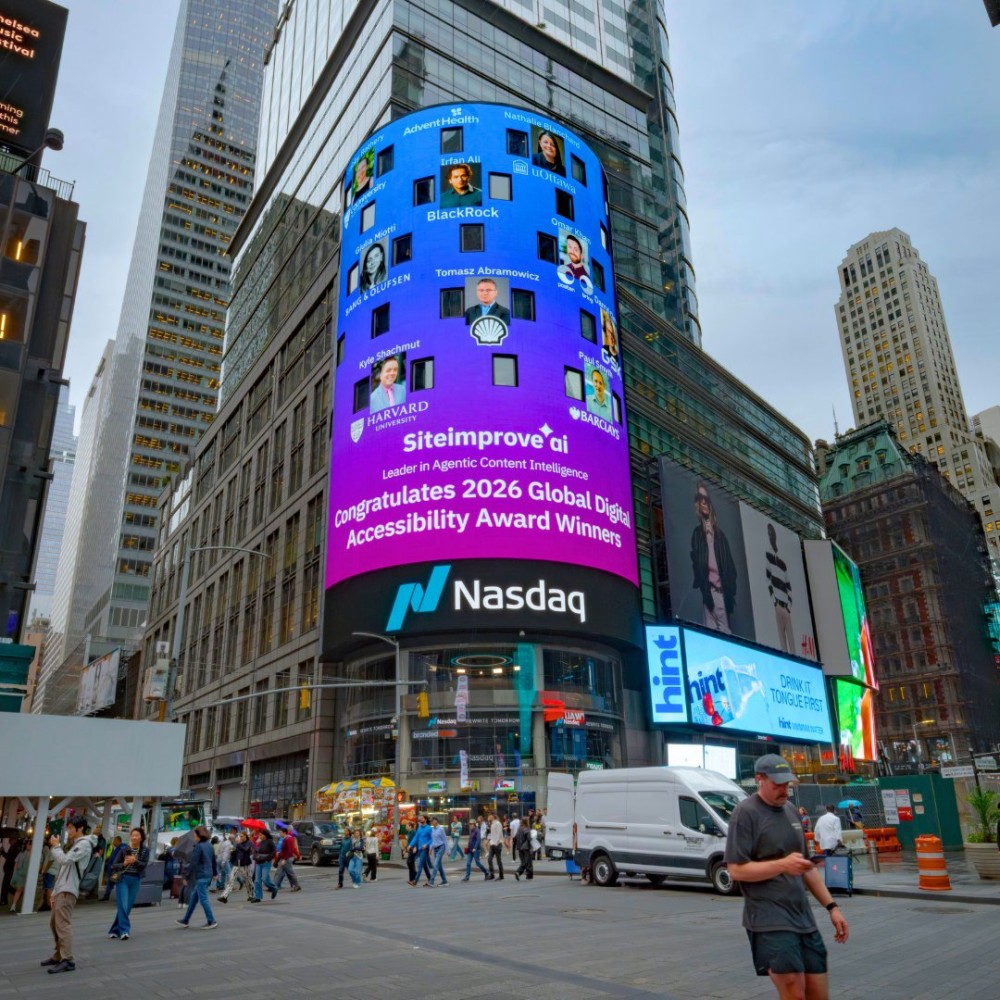
Siteimprove's Billboard on Nasdaq Building in Times Square
AIMAC Update: OpenAI now has all of the Top 5 AI Models
Regular readers know about AIMAC, the AI benchmark we run that scores how accessible the HTML generated by AI models is.
We made several major updates in June to capture the latest model results. As of June 23, OpenAI has the top five models, including GPT OSS 120B, its open source model. Pretty embarrassing for the rest of the pack.
Coming soon
Now that we've been running AIMAC for a while, we've done some analysis that will be published soon to look for patterns in the data. Is accessibility getting better at the frontier labs? How about open source and local models?
Preview: Only OpenAI has consistently improved its scores. The other model companies sometimes get better, sometimes get worse. The pattern looks pretty random.
Mythos is a Fable
Anthropic made a big deal about Mythos, its model that was supposedly so ingenious and capable that it was too dangerous to release. I was skeptical.
Andrej Karpathy has made the point that even when labs train models on cleaned-up versions of the internet, the training data is still mostly junk. For AI models to march towards Artificial General Intelligence, AGI, they need to filter out the junk in their training and focus on the gold.
Accessibility is a perfect test case. From an accessibility perspective, 99% of code is junk. The gold is in the 1% that is accessible. If a model is getting more intelligent in a general sense, then it should prefer the gold over the junk without being trained specifically on accessibility.
If Mythos is so smart that it's dangerous to release, then it should improve on the AIMAC leaderboard. But when Anthropic finally released Mythos as Fable, it came in 17th out of 37 on AIMAC. Not exactly genius-level, is it?
Media, podcasts and more
Here are a few appearances and media mentions since the last JDOT.
Thanks to Michelle Alimoradi of Tightrope Media Systems for interviewing me for the Government Video Podcast.
Keely Cat-Wells interviewed Lori Samuels and me for Forbes for the article "Artificial Intelligence Has One Chance To Get Accessibility Right". So many people have reached out about that piece.
I used to be very involved in the PHP community, including creating a then-new column for PHP Architect called community corner. How cool to find out, so many years later, that it is now a podcast too, and to be invited on #communityCornerPodcast. Thanks for the interview Scott Keck-Warren.
Steven Aquino, one of the most prolific journalists covering accessibility, interviewed Jennison and me for Curb Cuts. Thanks for the chat Steven and providing an update on AIMAC to your readers.
Having been an enthusiastic semwebber back in the day, serving on the advisory committee of Dataversity's SemTech Biz conference, and being longtime friends with Tony Shaw, it was a special pleasure to be interviewed by Shannon Kempe for the Dataversity Podcast, My Career in Data.
The next couple of mentions are Accessible Media Inc. properties. I love AMI, a broadcast media company specializing in disability, with TV, radio, and digital media across Canada. Shout out to the late, great Robert Pearson for introducing me to the network. Another great father gone too soon.
Steven Scott and Shaun Preece interviewed me on Double Tap for an episode called GAAD 2026: Accessibility Wins, Challenges, and the AI Revolution.
And as I write this, Eamon McErlean and I just turned the tables on them by interviewing the interviewers for our Accessibility and Gen AI Podcast. They are so funny. And even though they like to pretend that everyone they interview is smarter than them, they are actually quite brilliant :)
Also for AMI, Jennison and I were interviewed by Grant Hardy on Reflections. The episode is called GAAD: Change Makers at Work.
Since the last JDOT, Episode #17 of our podcast with Eric Provencher was released. I'm happy for him to announce that Eric has since transitioned his company, Repo Prompt, to an open source project, because he was hired to a Developer Relations role at OpenAI! Congratulations Eric!
The State of PA joins over 50 Government entities to have previously recognized GAAD
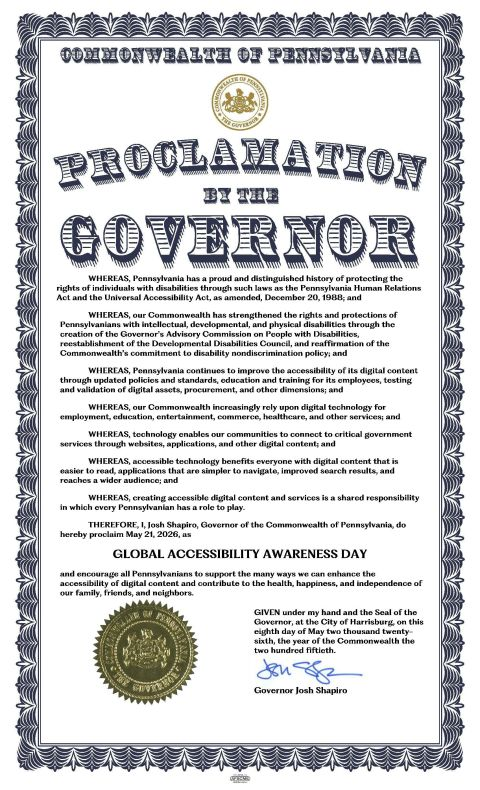 View full-size image: Certificate called "Proclamation by the Governor" stating that Josh Shapiro, Governor of PA, recognizes Global Accessibility Awareness Day.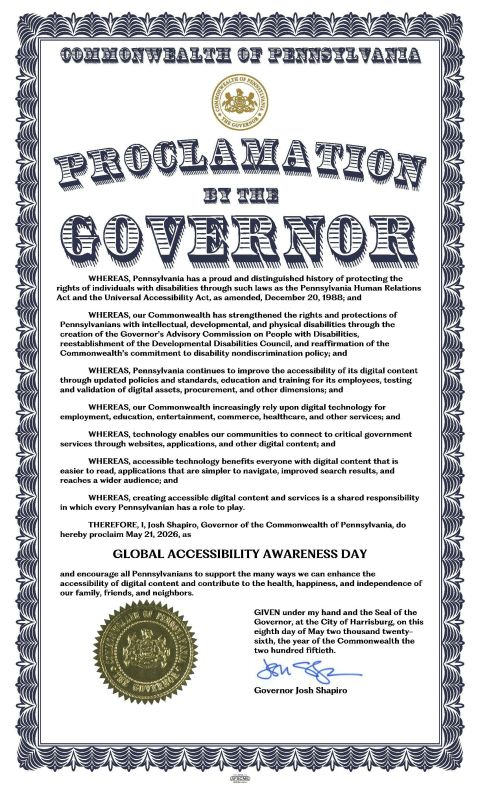
Certificate from the Governor of PA recognizing Global Accessibility Awareness Day
Thanks to Josh Shapiro, Governor of PA, for recognizing Global Accessibility Awareness Day. This led me to do some research to figure out how many other governments have issued similar declarations. Depending on how you count them, I've found about 57 so far.
New Friends of Accessibility
One of my favorite results to see from GAAD and general accessibility work is when I make new friends who show an interest in accessibility and start to bring it into their work.
Thanks to Ray Starck for introducing me to Joel Fogelson who wrote a fascinating article about accessibility on his "Take my IP" Substack. The piece is called: "The Right to Human Judgment - Is this the Way?"
Ray's whole team want to incorporate accessibility into everything they do.
Thanks also to Ariel Jalali who told me to connect with his friend #BenBadejo, who has become quite popular in the wake of OpenClaw. Ben helps people to set up and manage their openclaws. He put real thought into accessibility in VoiceClaw Realtime, the iOS and watchOS app he just shipped that runs your computer by voice, hands free, even over cellular.
I'm sometimes hesitant to publicly mention people who are new to accessibility, because the community often expects perfection out of the gate. Developers need time to learn. So if you try out products by folks like Ben, and it isn't perfect for accessibility, send them a bug report and encouragement. Bring them into the community in a friendly manner, instead of scaring them out of the field.
Other company announcements for the 15th GAAD
GitHub published a new accessibility strategy built for the AI era. If you're a developer, their GAAD blog post is a must-read.
Among a slew of accessibility updates, Apple released a feature for Apple Vision Pro users to control their wheelchairs with their eyes.
As they do every year, Netflix had an Accessibility Awareness collection for the entire month of GAAD. They also added a Search by Language feature that lets you find titles not only by language but by accessibility format. They now have more than 13,000 hours of audio description across 34 languages.
Meta is adding voice controls to calls across WhatsApp, Messenger, and Instagram, one-touch Be My Eyes on its Ray-Ban and Oakley smart glasses, and in-lens captioned calls on the Meta Ray-Ban Display.
HBO Max released House of the Dragon in American Sign Language, with a dedicated ASL director and on-screen performers.
Xbox added a new Goal Post shape to its adaptive thumbstick toppers and released it as a free 3D-print file, so anyone with a printer can make one.
Bonnie (Gold) Parisi wrote a blog post for Salesforce highlighting their new Accessibility Agent to help scale accessibility in the age of AI.
Sony marked the occasion discussing the variety of innovations they've come up with from accessibility in cameras to accessible walking experiences using Sony's visual positioning system (VPS).
Ubisoft launched Accessible Games Initiative Tags for Global Accessibility Awareness Day.
My true feelings of personal pride, awards and recognition for GAAD
People often ask me how I feel about creating a movement that has impacted so many. But I'll tell you what makes me most proud of GAAD. It's that we had this impact without a monetary incentive. Without a budget. Most media that you see has a profit motive. Money behind it. CEOs of major charities take home $500K a year to run it.
We have earned media on the order of some of these organizations. #GAAD has reached hundreds of millions of people a year for a decade before we had an organization. We are volunteers. No CEO salaries. A small budget to help with our initiatives.
From my perspective, the only reason we needed a foundation, was that we wanted to support and develop the next generation of accessibility practitioners, so the work continues when it's our turn to step back. You can't build that in one year. It's important to think about succession if we want to steer GAAD in a direction that keeps to our ethos.
I'm so pleased to have my mentee, Ben Ogilvie come on board as Vice Chair. To have Anna Thielke join us. In addition to our wonderful board members.
Now what does this all mean? It means that #GAAD is nothing without you. It's a grassroots movement. People heard of it because you run local events. In your communities. In your companies. You reach out to your local government officials. You ask journalists to cover this event.
GAAD is YOU.