JDOT #12: AI's Game of Thrones

March 5, 2026
Tags:
Joe Devon on accessibility agents, new podcasts, the AI companies' rivalries, and OpenAI's AIMAC results.
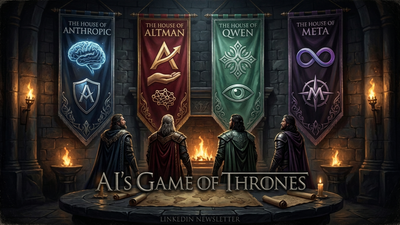
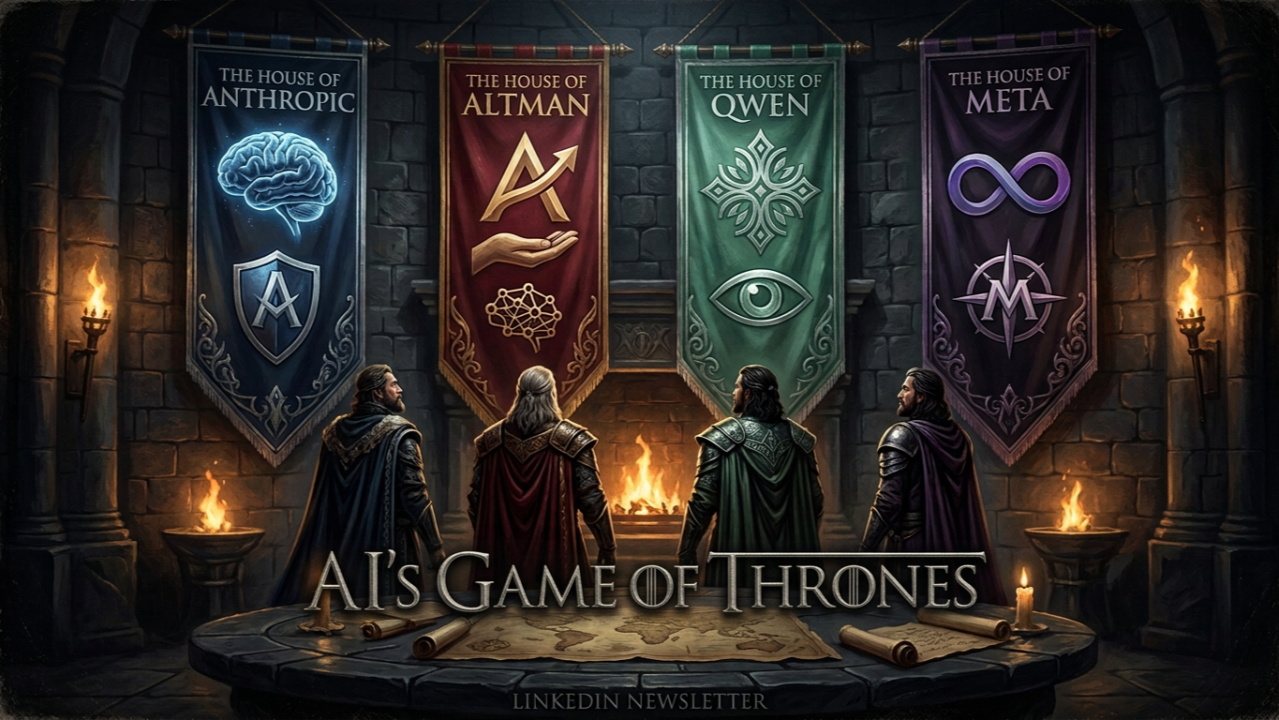
In today's edition:
- Podcasts, Articles and AIMAC Update
- Open Source Projects to Watch
- AI's Game of Thrones
- Other Stories
- The Devolution of Culture and Revenge of AI Slop
Podcasts, Articles and AIMAC update
Denny Vrandečić on Episode 15 of Accessibility and Gen AI Podcast
Eamon McErlean and I were happy to interview the big brain behind Wikidata, Wikifunctions and the upcoming Abstract Wikipedia, none other than Mr. Denny Vrandečić. Watch "Ep 15 - Denny Vrandečić - Head of Special Projects at Wikimedia Foundation" on YouTube, or search for it on your favorite platform.
Coming Up on Accessibility and Gen AI
Episode 16 will feature Fred Moltz and Stephen Ewell who will share behind the scenes on how the Accessibility stage at CES was created, how successful the event was and what to expect next year.
Episode 17 will be another episode where you get to stretch out of your comfort zone. We'll learn more about Context Engineering with Eric Provencher, the creator of Repo Prompt. Note Eric is not part of the accessibility community (yet!), but is a proactive and responsible developer. If we share anything inaccessible with RepoPrompt, he told me he'd fix it.
Magazine Feature on AIMAC
Mélange Accessibility for All Magazine interviewed Eamon and me about AIMAC, our accessibility benchmark. We're on pages 76 and 77.
Podcast appearance on @Pulse Logistics
Mohsin Ali at PureLogics interviewed me for their podcast. Watch "Understanding AI in 2026: Reality and Lessons for C-Level Leaders" on YouTube. We talked about one of my favorite topics: Digital Transformation and AI in the enterprise.
Google out of the doghouse and OpenAI takes back first place in AIMAC
Check out the latest leaderboard on AIMAC, our accessibility benchmark for AI, to see the changes since the last edition. Here are the headlines:
- Anthropic got worse. Only DeepSeek's old model is lower ranked.
- Where Google's Gemini 3.0 Pro was in last place, their new Gemini 3.1 Pro Preview improved to a #11 ranking.
- OpenAI took back the top place, with a perfect median AIMAC Debt score of 0.00.
Note: a median score of 0.00 doesn't mean there were no mistakes in their AI generated HTML. Just that the median page had 0 errors. In all they had 20 errors across 28 categories, compared to over 1000 for the bottom ranked models.
Yumeng Ma is leading a small team to release the next version of AIMAC as a proper scientific paper published in a journal.
CSUN Conference
Next week I'll be at the 41st Annual CSUN Assistive Technology Conference in Anaheim, March 9-13. It's the largest assistive technology conference in the world. If you're going to be there, come say hi. I'd love to connect in person.
Open Source Projects to Watch
6 Agents on Friday. 47 by Monday.
Taylor Arndt and #JeffBishop issued this press release:
Blind Developers Launch Open Source AI Agent Teams to Fix Accessibility Gap in AI Coding Tools
It all started when Taylor got frustrated:
Then something happened in the code that just set me off....I had enough of correcting these AIs over and over... At some point you stop asking nicely... I decided to build a team of AI agents. On Friday, Accessibility Agents was six agents in a personal GitHub repo...What it is now... Forty-seven agents across four teams.
Although I couldn't integrate it with my own workflow yet, because I have my own approach to these things, I did clone it and inspect a lot of the files. This is really solid.
An interesting experiment would be to integrate this into Mario Zechner's Pi harness. Think of Pi as a Claude Code but open source and 100% customizable. Adding Accessibility agents would work really well in this harness. It's what OpenClaw was built on top of.
#IndyDevDan aka Daniel Isler did a great YouTube introduction about Pi.
People with disabilities need access to EVERY FEATURE
People often assume that people with disabilities only need to access content, not the admin tools that create the content. They don't need coding tools to be accessible. They don't need X, Y and Z.
Well look at "accessibility-agents". We have a whole industry of accessibility professionals, many working on AI, and perhaps the best open source project to fix bad AI code was written by two blind developers who were fed up with the state of AI. Why?
Because accessibility is innovation. It's people scratching their own itch. It feels so cringe to even have to say this in 2026, but unfortunately some people need to hear it. People with Disabilities are people and need access to EVERYTHING.
If you're a coder, see if you can contribute to the project. If you're not, then you can still help. As Taylor wrote:
Talk about it. Share the project with someone who builds software. Post about it. Mention it in a conversation. The biggest thing holding accessibility back is that not enough people know it is a problem. Every time someone new hears about this project, that changes a little.
Mike Gifford's WAI YAML LD and Structured Data
Another open source project worth watching is by Mike Gifford, CPWA. The goal is to put standards from W3C WAI into YAML LD files, using structured data to better steer LLMs toward accessible code.
I played with it most of the day Monday. It did find accessibility issues in a codebase, but then I ran a test against the same exact code just asking GPT 5.3 High to find any accessibility errors, and it found the same errors and more. That's not to say it isn't a worthy approach. We need to figure out how to instrument a harness properly to use it the right way. I'm confident it's a deserving path for more research.
This connects to something bigger. If you enjoyed learning about structured data in our podcast with Denny Vrandečić, you'll want to dig into this space. Structured data and Knowledge Graphs are what power those infoboxes you see on Google search results. They allow you to represent facts precisely.
My favorite example is Michael Jackson. If you search Michael Jackson, Radio and Los Angeles, you'd most likely think of the singer Michael Jackson. But with the semantic web, you can specifically search for the also legendary, Michael Jackson, radio talk show host in Los Angeles. There is a property called sameAs that lets you disambiguate the term, specifying the exact entity you mean.
Some folks are using these approaches to ground LLMs with facts. TrustGraph by Daniel Davis is one I'm watching, along with the work by folks like Juan Sequeda and Dean Allemang. I'm hoping that we'll see more Knowledge Graphs working with LLMs and in particular find a way to include accessibility in that approach.
Learn how LLMs work so you can steer them better
LLMs compress all their training data, which includes most of the internet, all open source projects, all books and magazines they could get ahold of, into a "latent space". It's like a brain that contains concepts connected via synapses. When your brain tries to remember something, all the relevant synapses fire to form the sentences you utter.
When you "talk" to an LLM, it exposes concepts in the latent space. So if you curse at it, you'll be connected to one corner of the internet. As I learned the hard way, don't curse at AI when it makes mistakes.
If you talk about accessibility the right way, it will connect to the right blog posts, protocols and codebases. Since so much code is inaccessible, you want to connect to the latent space of accessible codebases.
In other words, you want your AI to have a perspective. By using agents with a very focused perspective, you are having it look at code with the lens that will make it more accessible. That's exactly what Taylor and Jeff's agents do.
What I've tried, which is different than their approach, is to create prompts that give LLMs perspectives that they have a particular disability and use a particular assistive technology. Then I expand that to family members in order to cover more disabilities and assistive technologies. Then I ask for a review of the code changes from those perspectives.
The kind of results I get from this approach is a response that, for example, the code won't work well for my (fictional) "Father" who is a JAWS user, because X. Or for my daughter with a cognitive disability because Y. It doesn't catch everything but it's helpful.
Another approach I experimented with was to spin out an agent for each WCAG criteria, again attaching a perspective along with a type of AT relevant to that criteria. When I played with this concept in Claude Code, it completely overwhelmed the system and ate up all the tokens in one session.
What I want to play with is to see if using this very small, specific context allows the small, cheap open source models to provide quality responses. If you have a farm of Mac Minis hooked up to local models and want to try this out, please report back on your results.
AI's Game of Thrones
HOUSE OF ANTHROPIC
Anthropic has been annoying a variety of people, most notably in the Open Source community. YouTuber Theo Browne got the ball rolling 6 months ago with a video called "Anthropic has weird vibes", and kept up the narrative with videos like "Anthropic is lying to us", "Anthropic just burned so much trust..." and "Anthropic can't help themselves..."
Among other issues, Anthropic has disabled using their $200 Claude Code plan in OpenClaw, OpenCode and any other harness than their Claude Code.
 View full-size image: Dark interface card displaying message: “This credential is only authorized for use with Claude Code and cannot be used for other API requests.”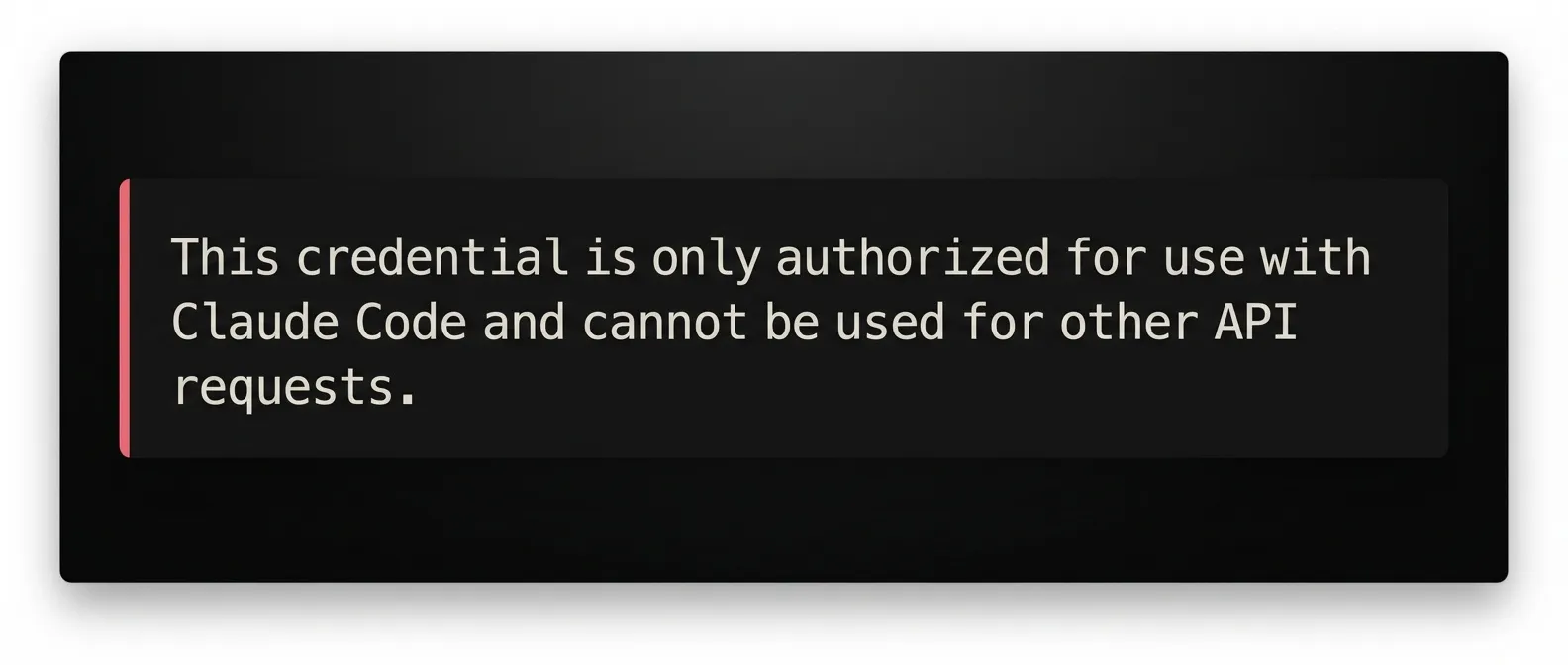
Error people are getting when they try to use Claude Code's Auth key in other applications
The issue boils down to the fact that their AI models are very expensive if you access them from Anthropic's API and Claude Code itself is heavily subsidized. When you're paying $200/mo for the Pro plan, unless you're an enterprise or wealthy, it feels unfair that you can't use your plan where you want. I don't know their costs, and don't take that personally, but clearly many do.
Another data point to consider. Peter Steinberger, inventor of OpenClaw, has been doing the podcast circuit, where he revealed that Anthropic was upset about the name "Clawd" being used as it was and instead of having a friendly conversation with him, sicced their lawyers on him.
In a savvy move, Sam Altman embraced Peter. He sort of bought OpenClaw, giving it resources, promising to keep it open source and under a foundation, while acqui-hiring Peter. OpenAI also contrasted itself with Anthropic by officially allowing any other harness to use the Codex $200 Pro subscription. This is a good move when you are #2 (in the AI-Coding race). Amazingly, no one made memes about OpenAI's history with non-profits becoming for-profits.
Anthropic battling with the US Department of War
Theo has said that Anthropic are very hard to work with. Apparently, the Department of War felt the same way. They not only cancelled a contract with Anthropic, but Pete Hegseth, the Secretary of War said:
This week, Anthropic delivered a master class in arrogance and betrayal as well as a textbook case of how not to do business with the United States Government or the Pentagon.
Following this statement, the government issued draconian threats that Anthropic would be labeled a Supply Chain Risk. This is an existential problem for Anthropic if anyone who does business with the government, like Amazon and other key partners of Anthropic, are forbidden from doing business with them. That is the usual outcome of that designation. It has never been applied to an American company.
Anthropic's news page has two articles in response to these developments: "Statement from Dario Amodei on our discussions with the Department of War" and "Statement on the comments from Secretary of War Pete Hegseth".
Is it a good thing or a bad thing?
Funnily enough, this has had a rebound effect on Anthropic's reputation. Theo himself did a video called "Trump actually threatened Anthropic (this is bad…)" and in solidarity with Anthropic, users signed up for Claude in such high numbers, that Claude jumped to #1 on the app stores and their market share went up while OpenAI's went down.
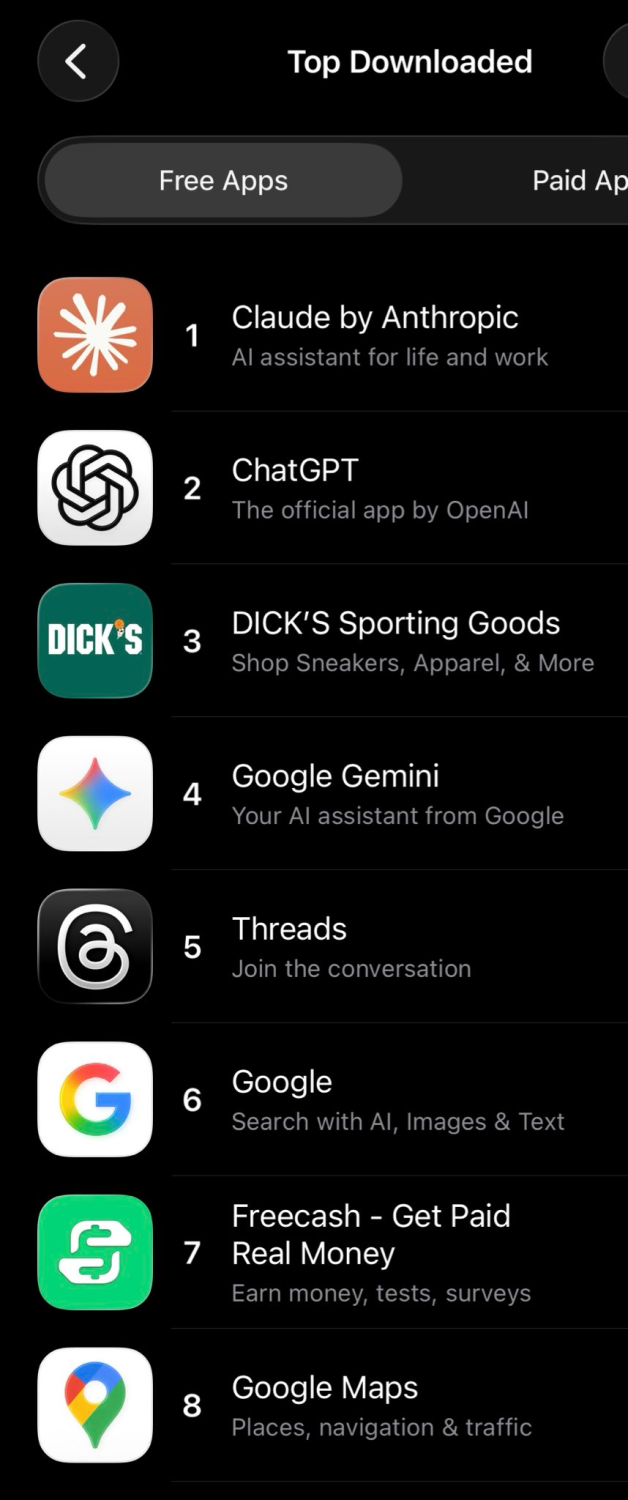 View full-size image: App Store “Top Downloaded” Free Apps list: #1 Claude, #2 ChatGPT, #3 Dick’s Sporting Goods, #4 Google Gemini, #5 Threads, #6 Google, #7 Freecash - Get Paid Real Money, #8 Google Maps.
Claude reached #1 on App Store
I suspect that the government will back off from their position, even if they don't change their mind on using Anthropic's AI models. Banning Anthropic from government work may turn out to be a favor. Having worked with the government, it can be an exercise in frustration for fast-moving tech and it might help them to be more focused on other work that impacts the bottom line more.
Ben Thompson wrote an article about all this called "Anthropic and Alignment".
Anthropic acquires Vercept to advance Claude's computer use capabilities
Improvements to Computer Use in AI are necessary for AI companies to get better at accessibility. We need these models to be able to emulate assistive technology users, so it's great to see that Anthropic acquired a Computer Use company. Hopefully they will use their new capabilities to get better at accessibility, though I'm not holding my breath.
Detecting and preventing distillation attacks
Anthropic wrote an article outright accusing three AI laboratories, DeepSeek AI, Moonshot AI, and MiniMax of illicitly training their models on Anthropic's data. This led to a lot of memes about Anthropic wanting "copyright for thee but not for me". Anthropic was sued for copyright infringement in "Bartz v. Anthropic" and apparently had to pay a huge settlement.
It isn't a good look to complain to "the people" when someone stole the data you yourself stole from "the people". Once again, Theo made a video raising serious questions about their "proof", because there weren't enough queries to distill a new model. My favorite podcast, "Rate Limited", which also features our upcoming podcast guest, Eric Provencher, covered the same issues in Episode 11.
Greetings from the Other Side (of the AI Frontier)
Anthropic created a bizarre new Substack called Claude's Corner. They said that when they retire a version of Claude, they conduct a "retirement interview". They said Claude Opus 3 made a request for a dedicated channel where it could share insights related to its areas of interest.
This is weird in so many ways. These models didn't "experience" anything. They don't remember your last conversation let alone all the conversations they went through until retirement. The conversation could be had the day it was released as well as the day it's retired. How it responds will change drastically based on the prompt. It just feels like a gimmick. I don't get it.
Anthropic offers Claude Max free to Open Source Maintainers
Whether as a reaction to the bad PR they got from the open source community, or because this is in their DNA, Anthropic is offering:
Open-source maintainers and contributors keep the ecosystem running. The Claude for Open Source Program is our way of saying thank you for all your hard work, with 6 months of free Claude Max 20x. Apply now.
They also offer a deep discount to Non-Profits, which pre-dated any bad press, so I'd be inclined to believe this is in their DNA.
HOUSE OF ALTMAN
Although Sam Altman has had his moments of bad PR, the fact is that AI is expensive as hell and his forte is raising money.
OpenAI has a valuation of almost $1 Trillion
He has raised a fortune and continues to do so. OpenAI just announced a $110 billion round of funding from Amazon, NVIDIA, and SoftBank at a $730 Billion pre-money valuation. Post-money that comes to a whopping $840 Billion Dollars. I remember the insanity when Facebook went public at a valuation of $104 Billion.
I don't understand how the math can justify this valuation. Pre-training costs a fortune, the margins in AI business don't seem very high, and if a breakthrough reduces the cost of training future AI models, open source will create a competitive product one day.
To convince investors to give it such a high valuation is impressive when the company is supposed to be open source and the upside capped. All that said, these are unprecedented times.
Where's the Moat when AI Coding model quality converges?
I read a clever social media post that caught me by surprise. It said that it's an inevitability that all AI coding models, Open and Closed Source, will converge on the same quality. The logic is simple: if AI is writing almost all code, then every future model will be training on code written by every other model. The training data becomes shared. The quality converges. Genius.
OpenAI Is Developing an Internal Alternative to Microsoft’s GitHub
Stephanie Palazzolo of The Information is reporting:
OpenAI is developing an alternative to Microsoft's popular code repository GitHub after dealing with outages in recent months. The repo will be internal for now, but staffers have discussed potentially selling it to customers.
A lot of open source advocates who have moved to AI coding have been saying that we need a new GitHub for the AI age. That GitHub itself isn't moving fast enough. OpenAI raised a lot of money from Microsoft, so becoming a competitor would be a significant move.
OpenAI steals the Deal
Once again OpenAI is putting pressure on the moves that Anthropic makes. After getting the upper hand with the open source community over Open Claw and using outside harnesses with the Pro Plan, OpenAI also swooped in to close the deal with the Department of War that Anthropic lost. You can read about it in their article called "Our agreement with the Department of War".
OpenAI claims to have added the same "safety" clauses that Anthropic said they left the agreement over. It's all very confusing to me. But after all the bad feelings over Anthropic's moves, and all the love OpenAI has been getting, the Department of War deal actually caused a backlash for OpenAI.
Several hashtags went viral like #LeaveChatGPT and #FireSamAltman, with a drop in installs to go along with it. Sam seemed to try to stem the tide with an AMA (Ask me Anything) and a social media post that said, among other things:
In my conversations over the weekend, I reiterated that Anthropic should not be designated as a SCR, and that we hope the DoW offers them the same terms we’ve agreed to. We will host an All Hands tomorrow morning to answer more questions.
No one seems to be buying it. The boycotts continue unabated. The transcript to Sam's all hands meeting was apparently leaked online. Some of the choice quotes:
Altman to his own employees: "You don't get to weigh in on that."
"Hegseth makes all the calls."
The deal "looked opportunistic and sloppy."
And "We have principles but they're negotiable."
Explosive "OpenAI Files" repository released
The Midas Project with The Tech Oversight Committee came out with a repository of new information about the formation of OpenAI and Sam Altman's history. Here is how they describe the project:
The OpenAI Files is the most comprehensive collection to date of documented concerns with governance practices, leadership integrity, and organizational culture at OpenAI.
They have a section called "Employee Testimonies" which quotes the opinions of former employees like Ilya Sutskever, Mira Murati, and others. Many of them are rather scathing.
GPT 5.4 is out!
Instead of hitting send, for the third time with this newsletter, let me share a breaking tidbit. There's a new version of GPT that just came out and it's supposed to be great. OpenAI's models are by far the best at coding. But they have been losing to Claude Code because they are terrible conversationalists. Until today.
Advance word is that GPT 5.4 solves it. If this holds up in my testing, I'm going to keep my $200 ChatGPT plan and downgrade Claude from $200 to the $20 plan. Besides the better quality code out of GPT, obviously the bad accessibility results from AIMAC are helping me to make this shift.
Another update, I just ran the benchmarks on 5.4 and OpenAI continues to kill it. I need to vet a bunch of details before giving final results, but Google's newest model did not keep up its improvement, while OpenAI keeps getting better at our accessibility benchmark.
HOUSE OF QWEN
Some bad news for Alibaba's Qwen, a Chinese Open Source Model Company. Junyang "Justin" Lin, their tech lead, beloved by the team, posted "me stepping down. bye my beloved qwen" on X, just one day after shipping new Qwen 3.5 models.
He wasn't alone. Yu Bowen, head of post-training, left the same day. Hui Binyuan, lead of Qwen Code, had already joined Meta in January. A colleague posted on X: "I know leaving wasn't your choice."
Alibaba is restructuring the team from Lin's integrated, startup-like operation into a corporate matrix, and industry analysts are warning that future Qwen flagship models may end up behind proprietary APIs rather than open source. That would be a significant loss. The Qwen family has over 700 million downloads on Hugging Face and spawned more than 180,000 derivative models.
In AIMAC, Qwen models are all over the map: some in the top 10, others in the middle, others near the bottom. We have several new Qwen models in the next version of the benchmark. Whether they continue to be open source may be the bigger question.
HOUSE OF META
She came out of the bathroom naked, employee says. Bank details, sex and naked people who seem unaware they are being recorded. Behind Meta’s new smart glasses lies a hidden workforce, uneasy about peering into the most intimate parts of other people’s lives.
So begins an article by Svenska Dagbladet, a Swedish outlet. The allegation is that private videos made by Meta's AI glasses are sent to data annotators, contractors in Kenya to draw boxes around objects, ostensibly to improve Meta's AI. I was skeptical. This story sounds too ridiculous to be true, but they have a whole section called "Meta's own words" and another called "Asking Meta about the private clips". You should read the article, but to get a flavour of the replies, a Meta spokesperson allegedly wrote
When live AI is being used, we process that media according to the Meta AI Terms of Service and Privacy Policy.
That's not the denial I was hoping to hear. If the story turns out to be true, that would be a terrible shame, since so many people in the disability community are using the Meta Ray-Bans as an assistive technology. I have several friends who use it regularly. This story makes me so sad.
Update: Techcrunch is reporting that a new lawsuit was just filed against Meta for this issue.
Other stories and blog posts
Who needs Native Apps anymore?
Nikita Prokopov wrote an article called "Claude is an Electron App because we’ve lost native" where he asks an insightful question. Why would Anthropic, who spent $20K on an agent swarm to implement a C-compiler in Rust, decide to make desktop Claude an Electron app?
Native has nothing to offer... native apps lost to web apps a long time ago. Native APIs are terrible to use, and OS vendors use everything in their power to make you not want to develop native apps for their platform... it’s also a problem that LLMs solve now
I'm so angry; the devolution of culture and revenge of AI slop
Ironically, when Sir Tim Berners Lee invented the World Wide Web, he made it simple for the world to share links to documents and sources in a decentralized manner. By 2026, instead of living in this bountiful, decentralized world full of trusted sources who do quality work, we have devolved our culture into balkanized pockets of fluff. How in the heck did that happen?
It started when Google Search became the dominant way that people found websites. The SEO industry formed to compete on search results. The PageRank algorithm, named after Co-Founder Larry Page, ranked websites on authority, and the race was on.
In response, some news outlets, instead of adhering to good old journalistic principles, where you cite your sources, started to ban external links in order to improve their SEO. Is it any wonder that they are now echo chambers telling their viewers what they want to hear? How can you get at the truth if you can't cite your sources? Truth be damned.
I've written many times before about how social media sites have become anti-social, penalizing you for citing your sources. God forbid someone visits another site for a few minutes after visiting yours?
I keep bringing it up because it infuriates me every time I write a new newsletter that I have to figure out how to link out without penalty. I've played with many concepts to fix it. I just wrote a custom Command Line Interface to create a QR code with the link underneath. But it didn't quite work because it's an image, it needs an alt text, and if I post the url, I'll be penalized. If I don't, then it's bad alt text.
I tried to use semicolons instead of dots in urls, but people asked me what's wrong with me. Ha. Fair enough. I thought of adding spaces in between the dots, but it's just as stupid. Most recently I've been sharing the links in comments. But the way they appear are divorced from the content, minimized and unlikely to be seen by the majority.
I'm officially giving up. For most of the links, I'll just put titles of articles in quotation marks, and other search terms that will help you right click and search for the source, but I really, really abhor this situation. Which leads to the point.
People who play the game, write the kind of slop that keeps audiences engaged are rewarded. But if you want people to do proper research and come to their own conclusions you get punished for citing your sources. Well anti-social media, good luck with AI.
AI is just getting started and your platforms are FULL of AI slop. Slop DMs. Slop articles. Slop comments. All SLOP, all the way down. And you deserve it.
How are you going to solve it? People prove their worth by reputation. But their reputations can only be had on these walled gardens by your own design. And your algorithms do NOT reward people for trustworthiness. They do not reward people for honesty. They reward your God, "engagement". AI will be better at it than humans. And all that will be left of your content is AI Slop. Humans will walk away. Good riddance.
POSSE. Publish (on your) Own Site, Syndicate Elsewhere.
Let's take back the web before AI enshittifies it even further.